
Simple clear, $150–$300
Pan or S-bend blockage, business hours, one visit. The majority of single-toilet call-outs finish here.
One toilet down can stop a whole household. We get to Beaumont Hills jobs same-day, clear the blockage without redecorating your bathroom, and, when a toilet keeps blocking, put a camera down the line to fix the reason instead of the symptom.
Kind one is an event: something went down that should not have, wipes that lied on the packet, cotton pads, a small toy on a big adventure. The right tool clears it in one visit and the story ends. What turns kind one into a disaster is escalation: hammering the plunger at something compacted, or pouring caustic chemicals that sit in the S-bend waiting to splash the next person who tries.
Kind two is a pattern, the toilet that goes down every few weeks. That toilet is innocent. The sewer under it is not: tree roots through old clay joints, a bellied run holding waste, scale closing the bore, all endemic under Beaumont Hills’s older streets. Patterns get the CCTV camera, because paying once to fix a drain beats paying monthly to clear a toilet, and the footage means you never take our word for anything.

On a home still within its defects period it is worth asking before anyone does anything. Workmanship faults, a displaced joint, a fall out of tolerance, debris left in the line: are generally the builder's; ordinary blockages are not.
Beaumont Hills sits in Sydney’s Hills District (postcode 2155), a newer master-planned suburb built largely through the late 1990s and 2000s, bordering Kellyville, Rouse Hill, Castle Hill and Stanhope Gardens. From family homes on tidy estate streets to townhouses and duplexes near the local shops, its drains see plenty, and we know the local ground well.
We document what we find in terms a builder or insurer can act on, with footage. You may still want it fixed tonight. The report is what lets you recover the cost after.
Many properties share drainage runs across townhouse and duplex developments, so one blockage needs a camera and the right access to clear it properly.
In an apartment this is the first thing to establish, because it decides who pays. A blockage in the pan or the branch serving only your bathroom is yours. A blockage in the stack or the line serving the building is the owners corporation's.
The quick tell: if your fixtures back up when nobody in your apartment is using water, or worse, when a neighbour runs theirs, the problem is downstream of your lot and it is not your bill.
As the suburb’s estate gardens and street trees mature, their roots reach into pipe joints and small cracks, a growing cause of recurring blockages here.
The tree is rarely the villain, and removing it is rarely the answer, a mature tree is worth more to the property than the drain repair costs, and the roots already in the line do not vanish when the trunk goes.
What helps: knowing where your line runs so future planting goes elsewhere, and sealing the joints that are already open. If the tree is on council land or a neighbour's property, the repair is still yours, but the camera footage is what any conversation with them needs to start from.
The most common blockage in a new home has nothing to do with how the home is used. Sand, mortar, grout and offcuts that entered the line during the build settle at the first low point and slowly narrow it until ordinary use finally closes it over.
One thorough clear normally ends it for good. It is worth doing properly rather than quickly, because the debris that gets left behind is what causes the second call.
A shared stack collects everything from every apartment on it, and a single household flushing wipes can block a line for forty other people. You will never know which one, and it does not matter, the fix is the same.
What does help is a note from the building manager to all residents after a stack blockage. It is the cheapest preventive measure available in a block and it is almost never done until somebody produces evidence of the cause.
Roots are not looking for your drain. They are looking for water, and a sewer line is the most reliable water source in a dry yard, slightly damp soil around a hairline crack is enough to tell a root where to go.
Once a root tip is through a joint it thickens, and what started as a hairline opening becomes a gap. The blockage you notice is the mass of paper and waste catching on the roots, not the roots themselves.
New pipe laid in a hurry can be laid slightly out of level. A run with too little fall does not carry solids; a run with too much lets liquid outrun them. Either way waste settles at the same point every time.
The symptom is a blockage that recurs on a schedule in a house far too new to have worn-out plumbing. A camera with a level trace confirms it in minutes, and the repair is one section rather than a system.
Pan or S-bend blockage, business hours, one visit. The majority of single-toilet call-outs finish here.
When it takes an electric eel or jetter running time rather than hand tools to shift.
The same work at night or on weekends, with after-hours attendance and labour rates applied.
The repeat-blockage answer: camera down the line, cause on screen, quote built on evidence you watch with us.
Valves, washers and seals fix most running or leaking toilets on the spot; a full new suite is one fixed quoted price.
If it can safely wait for business hours, we say so on the phone, that one sentence is often worth $300. Figures here are indicative of the 2026 Sydney market rather than a quote from us, you get your own number as a fixed price before any work starts.

One toilet or the whole house? Rising or just slow? Those two answers set the urgency, the toolkit and the price picture before anyone drives.
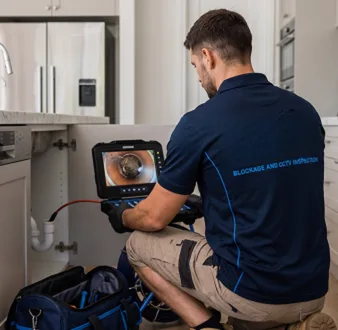
Floor protection first, then the correct tool: auger for the pan, eel or jetter for anything living deeper.
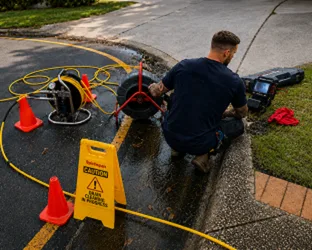
One-off with an obvious culprit? Done. A repeat pattern? The camera goes down, because history says the toilet is not the problem.

Roots jetted out, a bad section relined, or a worn suite swapped: whatever the footage proves, at a price fixed before it starts.
That is not a booking, that is an emergency, and the line treats it like one, 24/7.
Cleared today, cause identified, fixed price before we start: and the bathroom left the way we found it, minus the problem.

Leave your details and our local Beaumont Hills team will call you back fast.